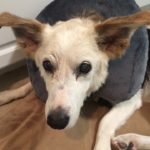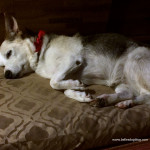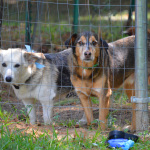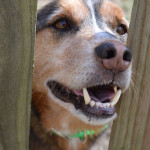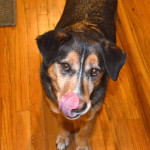
Belle sheds year-round. I mean, this dog really sheds. There is dog hair everywhere, and since I’m a bit of a neat freak, it can really bug me!
I have always done my best to vacuum the floors regularly and brush Belle to remove any loose hair, but she has such sensitive skin those specialized brushes for removing loose dog hair make her yelp. I tried a grooming glove. It worked pretty well, but I left them outside under the carport one day and they got stolen. I know, I know, who would steal dog grooming gloves?? Now I have a regular human hair brush for her. It doesn’t hurt her skin when I brush her, but it doesn’t work too well either. Bathing helps to remove a lot of the hair (I remove huge clumps of hair from the bath tub drain). But no matter what I do, there seem to always be little clumps of Belle fur rolling around my hardwood floors.
For someone who likes a clean house, but doesn’t always have the time to clean as well as I would like, the Roomba is a blessing. I have hardwood floors and it works very well on them. I have gotten where I turn it on in the morning and close my office door to keep the noise out while it runs. It runs while I am working and puts itself back on the charger when it is done. I love that I can get two things done at once!
I run it every three days just to keep up with the dog hair. It really has made a difference. I think of it as kind of maintenance for the floors. When I really want to clean, which involves moving furniture to vacuum around, I still use my traditional vacuum. But I haven’t done that in a while and the floors still look pretty good.
I have only had two problems with my Roomba. It sometimes gets caught up on the floor air conditioner vents, and sometimes the dog hair gets so wrapped up in the spinning brush that it clogs it up and keeps it from spinning well. Using a pair of tweezers, I can get the clumped up hair out and the Roomba will work fine again. You have to clean the brushes every time you use the Roomba, but a pair of tweezers will really help when the hair gets in hard-to-reach parts of the machine. As for the floor vents, I just have to move it off of them when it gets stuck. The benefits are much greater than the problems.
Things have changed a lot since the last time I posted. We have moved to a new house and a new dog has entered our lives.
Belle has a history of marking the indoors of new houses, so that was a bit of a concern when we moved in to the new house. We had spent almost a year and a half remodeling it, so the idea of a dog mess wasn’t appealing (not that it ever is).
So I went online and did some research on how to prevent a dog from marking territory in a new home. The best advice I found involved walking the dog on a leash to check out all of the rooms in the new house and then immediately take her outside to pee.
The first time we brought her home, she was walked through the house and allowed to sniff things a bit, but never left to stand still for too long. I went through every corner of the house. Then we immediately went outside and sniffed the yard until she peed.
Then we put her out in the yard to get used to her new outdoor space. We brought her in later that day, took her through the rooms to sniff the corners, and then it was back outside to pee and then back in her outdoor pen.
We did this several times whenever we brought her in and we kept a close eye on her – and it worked! No messes, no accidents, and no bad dog smell in the house. I would definitely recommend this to anyone taking a dog into a new indoor environment.
When she first came to live with me, Belle was not used to walking with a leash. Naturally, she pulled a lot on the lead. This was mostly because she was fearful of it and was trying to get away from it. She managed to pull a retractable leash from my hand once, and the noise it made as she ran down the street frightened her so much, she went faster and faster trying to outrun it.
OK, it was a little funny, but believe me, the pulling on the leash gets old quickly. Now that Belle enjoys her walks, she still pulls at the leash, but now it’s because she wants to walk faster or go over and smell something or chase a squirrel. I like to walk her twice a day, and it was getting so that I dreaded doing it. She even pulled down to the ground one time when I was trying to tie my shoe. That was the end of that!
After talking about my frustrations with walking Belle, one of my neighbors loaned me her dog’s steel pinch collar (also known as a prong collar). I was a little hesitant at first because this type of collar looks like some kind of torture device, but it made a huge difference in my walking experience.
Correct Placement of a Pinch Collar
The pinch collar has made a huge difference in my enjoyment of walking my dog. I can control her a lot easier when we encounter squirrels, loud cars, or other dogs. Even when she gets very aggressive and jumps up and tries to twist out of the collar, it’s not a problem because the collar allows for twisting without twisting my hand off!
Here are a few things that I learned about using pinch collars with dogs.
- Do not jerk it like you would to correct a dog wearing a traditional leather or vinyl collar. This can injure your dog.
- Size the collar to your dog. You may need to take out a few prongs to make it fit a little better, but don’t make it too tight.
- Place the collar at the top of the neck, closer to the head. This may require you to keep your lead a little tight to keep the collar in place. However, this gives you the best leverage for controlling your dog. If you keep the pinch collar down at the base of the dog’s neck, they may ignore it completely.
- Don’t take the collar off or put it on over the dog’s head. Have one prong that you have bent a little more than the others to make it easier to take on and off.
- Do not leave this collar on the dog when you are done walking or training him or her. This collar can get caught on something like a fence or a shrub and constrict on the dogs neck as he/she pulls and potentially hurt your dog.
I’ve been using the pinch collar for two years now and my dog doesn’t mind or fear it one bit. I have to admit that a lot of the time I have it down at the base of her neck lately, but as soon as I see another dog approaching we stop and raise it to the top of her neck for control. It has made walking with Belle so much more enjoyable and I no longer dread it.
It seems like this has been the wettest winter in several years. We have had a long period of rain interspersed with just a few cloudy but dry days here and there and a couple rare sunshine days too. All of this rain makes Belle’s dog pen very muddy. To make matters worse, the grass around the gate to the pen died before winter due to some sloppy weed-eating around the edges of the pen and there isn’t much of anything to keep the soil turning to mud.
After Belle’s recent surgery, I’ve been keeping her indoors almost all of the time, only taking her out briefly for bathroom breaks. Even still, her belly and legs get muddy and I have to towel her off when she gets back inside.
Yesterday I went out of town, so I had to leave Belle outside for the majority of the day. Although it wasn’t raining, her pen was VERY muddy. It’s important to keep my dog clean until the stitches come out, so I did what I could to make her pen more palatable.
Pine straw covering muddy spots
I had several bags of pine straw that I collected for mulch but hadn’t put on my flower beds yet. I distributed this in the muddiest spots inside and outside the pen. I cleaned out any wet debris from her dog house. Her dog house is on a palette, raised off of the ground to keep it drier and to allow it to try out faster.
She also has another wood palette in the corner of her pen that gives her a place to lay that is off of the ground. This is really useful when the ground is as wet and muddy as it is right now. It also provides a little more warmth than cold ground in winter.
My neighbor, Ms. Virginia, who owns a Jack Russell and another mixed breed dog, bought a bale of hay for her backyard this week. It helps her dogs stay out of the mud a bit better.
Although these aren’t the best options – a concrete floor in a pen would probably work best, they are temporary solutions to the wet ground in your backyard and help prevent your dog from getting too muddy during rainy seasons.
We got the results back from Belle’s minor surgery this past Monday. The skin growth was benign. Yay!
Stitches on my dog Belle after minor surger
Now she has a few stitches, but she has been doing well and is not scratching or biting at them. She licks them occasionally, but I’m trying to keep an eye on that and prevent her from irritating the location.
The blood work came back normal and there was no sign of infection in her urine sample either. The veterinarian and I discussed the frequent urination problem that she has been having. He recommended that I begin measuring her water intake. If she is drinking more than six cups of water a day (based on her weight), then this may be an indication of other problems.
This is day three of me measuring the amount of water I am giving Belle and how much she is drinking. She has not drunk more than three cups of water each day, which I think is a good sign.
Her requests to go outside to use the bathroom were very frequent on Tuesday (about 5 times in two hours one evening), but seem to have lessened as the week goes on. I suspect it may be a bit of a boredom and lack of exercise problem, since I haven’t been walking her much at all due to my illness and the really cold weather.
I’m going to begin to walk her more, especially since the weather is warming up, and see if that helps the problem. I will need to take it easy for another week though, due to the stitches in Belle’s stomach.